

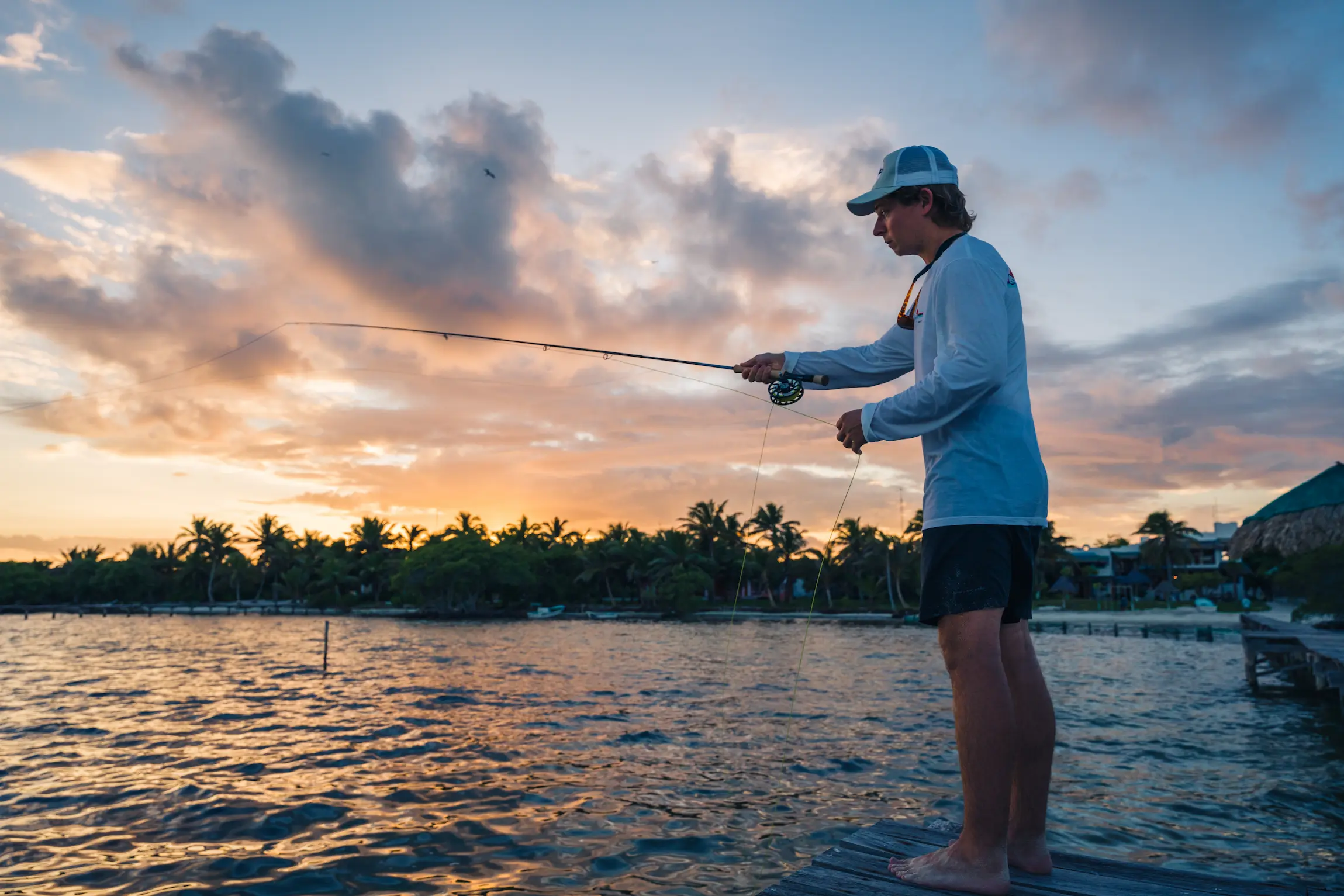
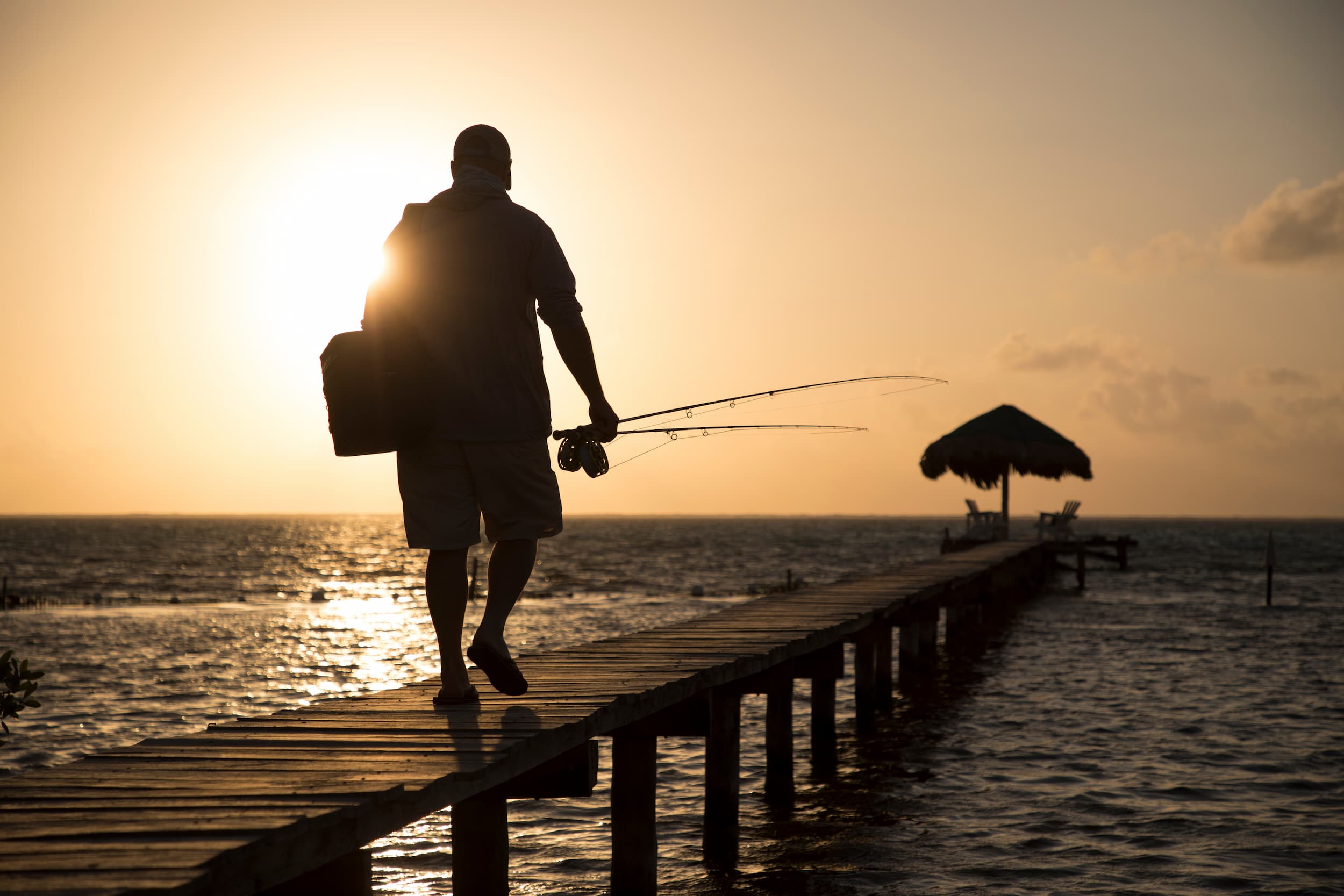
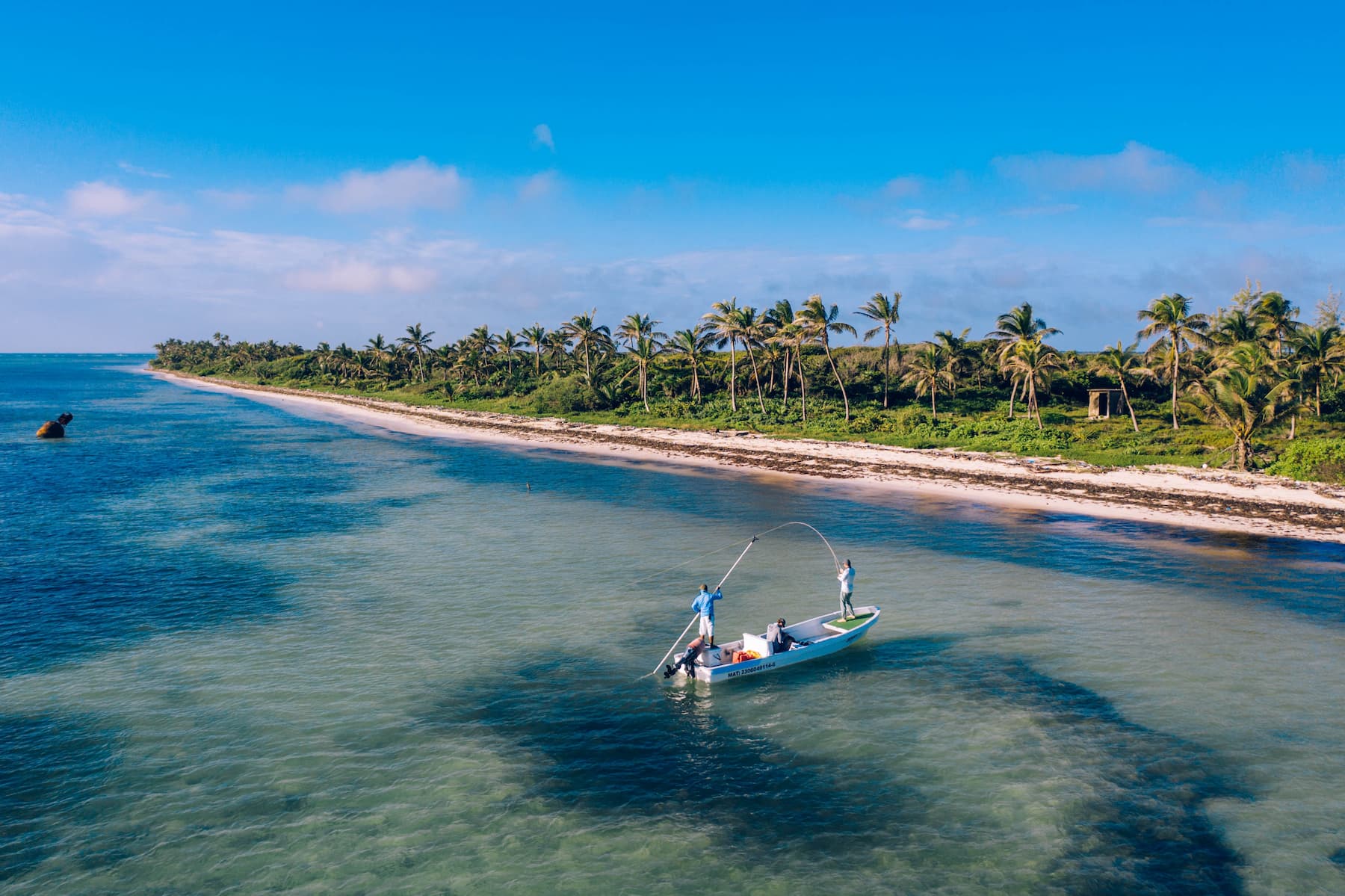
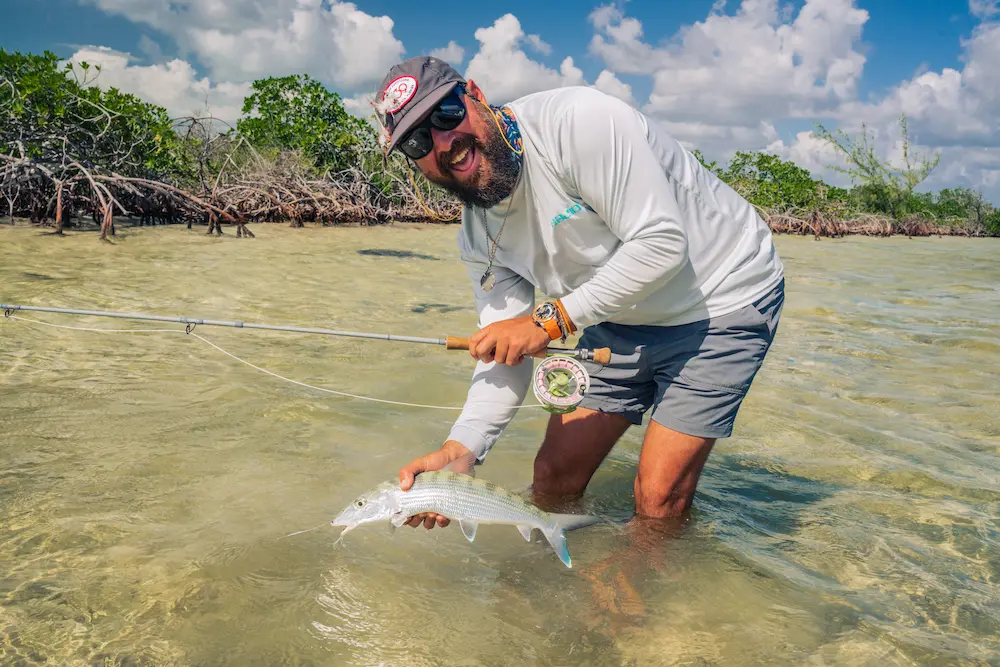
The guide goes quiet first. One hand comes off the push pole, two fingers point at ten o’clock, and out on the flat a black sickle of a tail lifts out of the water and slips back under. You have maybe four seconds. Your heart is doing something it hasn’t done since your first trout.
That’s permit on the fly in Xcalak. If you’re planning a permit fly fishing trip to Mexico, this is the trip-planning side of the story: why this corner of the Yucatan is built for permit, what a permit day here looks like, how the season runs, and what to bring. For the bow-of-the-boat details, we’ve covered presentation and the strip-strike in our five expert tips, patterns, weight and color in our crab fly guide, and why Chetumal Bay holds permit the way it does in its own piece. This one ties it all together.
Why Mexico Is Permit Country, and Where Xcalak Fits
Mexico’s Caribbean coast is some of the most famous permit water on earth. Ascension Bay and Espiritu Santo Bay built that reputation. Chetumal Bay, at the very bottom of the peninsula, is the quiet one.
Xcalak sits where Chetumal Bay meets the Caribbean, a few miles from the Belize border and four and a half to six hours south of Cancun by road. Fewer than forty boats fish the entire area. That number matters more than any other on this page. Permit that aren’t shown a parade of flies every day stay catchable. They hold longer, give you a second look, and forgive the occasional cast that lands a little hard.
The other advantage is range. In a single day, guides can run from sheltered back-bay lagoons to hard-sand flats on the reef side. When the wind shifts, there’s almost always a piece of water that still fishes. Permit fishing in Xcalak isn’t about one magic flat. It’s about having options. (If you’re still comparing destinations, here’s how to choose a fly fishing lodge in the Yucatan Peninsula.)
What a Permit Day Looks Like
Breakfast is around 7am. Your guide shows up around 7:30 and you’re off the dock by 8 or 8:30. Boats are back around 4pm.
The most useful thing you can do is tell your guide, out loud, that you’re here for permit. A permit day is fished differently than a bonefish day. Your guide picks flats by tide and wind, runs to where schools should be working, and spends long, quiet stretches poling and looking. You might go an hour without a shot and then see three groups in ten minutes. On a good day on Chetumal Bay, that can add up to thirty or forty permit sightings.
If you’d like to break things up with bonefish or a shot at a tarpon, say so in the morning. Not at 2pm, after the best permit tide has passed.
Be ready when it’s your turn on the bow: rod strung, fly in hand, line stripped off and stacked clean. Permit don’t wait while you find the tag end.
Where Xcalak Permit Hold
Chetumal Bay is a river-fed estuary, not a pure reef flat, and the permit here use all of it.
Inner lagoons. Sheltered, softer-bottomed water that holds resident schools. These are the go-to when wind is pushing the open flats around. Shots tend to come closer, and often to groups of fish.
Ocean-side flats. Turtle grass and sand that hold larger permit and the classic tailing shots. On calm mornings you can watch tails from a hundred feet out. On windy afternoons these flats get harder to fish and the fish slide deeper.
Channels and cuts. Mangrove-lined passages that link the bay to the Caribbean. Permit move through them with the tide and set up where food gets pushed along the edges. Our guides watch mud lines on a falling tide closely. That’s often where feeding fish are.
Want the science behind why this mix exists? Our piece on the Chetumal Bay ecosystem explains it.
Permit Season in Xcalak
Permit are here all year. Timing changes the kind of permit trip you’ll have more than whether you’ll see fish.
| Months | What to expect for permit |
|---|---|
| March to June | Peak activity, with May right in the heart of it. Schools tail and push shallow to feed. April is the windiest month. |
| May to July | The Grand Slam window: permit, bonefish and migratory tarpon all overlap. |
| July to October | Plenty of permit, but heat pushes them deeper midday, so fish early and late. Less pressure, more unsettled weather in August and September. |
| November to February | Good fishing on sunny days when the flats warm up. Cold fronts can push fish off for a couple of days, then they come back. |
April and May can also bring sargassum mats onto the flats, and permit will feed around them. Our guides tie a floating crab pattern for exactly that situation. For the month-by-month picture across every species, see when to fly fish Xcalak.
The Permit Setup That Works Here
Rod. A 9-weight is the standard. Some anglers prefer a 10 for punching heavier flies into the wind, and an 8 is pleasant on calm lagoon days. Bring a spare, because the nearest tackle shop is hours away.
Line. A floating, weight-forward saltwater taper that turns over weighted flies in wind.
Leader. A 10 to 12 foot fluorocarbon leader tapered to roughly 16 to 20 pound tippet covers most situations. Check knots and nicks after every fish and every snag. A permit will find the weak spot.
Reel. A sealed drag and plenty of backing. A good permit will show you a lot of it on the first run.
Flies. Crab patterns do most of the work, in a range of weights for skinny lagoon water and deeper bay flats. A dozen well-chosen crabs covers most weeks. Our permit crab fly guide covers which ones and why, and the Xcalak packing list covers everything else.
Practice casting in wind before you arrive. It’s the biggest single difference between anglers who make their shots count and anglers who spend the week fighting their line. Our saltwater prep page has video tutorials.
Honest Expectations
Permit have earned their reputation. Across destinations, success rates hover around six percent: about one fish landed for every seventeen shots. You’ll have days when permit seem to be everywhere and days when you wonder whether they still exist.
What Xcalak changes is the number of chances. More shots in a week means more practice reading fish, more chances to fix your presentation, and better odds at the one eat that changes everything. Plenty of anglers land their first permit here. Plenty don’t, and still leave understanding exactly why people spend years chasing them.
Handling Permit With Care
Chetumal Bay is protected water, and we fish it catch-and-release. A few habits keep the fish healthy:
- Fish a tippet strong enough to land the fish quickly instead of fighting it to exhaustion.
- Keep the fish in the water as much as you can. Have the camera ready before you lift.
- Support it under the belly, never by the gills, and hold it facing into the current until it swims off on its own.
- Watch for sharks and barracuda around a tired fish. Your guide will tell you when to move.
Permit on the Fly in Xcalak: FAQ
Is Xcalak good for permit on the fly? Yes. Xcalak fishes Chetumal Bay and the reef-side flats around it, a huge and varied permit fishery worked by fewer than forty boats. Permit are here year-round, and light pressure means more patient fish and more shots than at busier destinations.
What’s the best month for permit fly fishing in Xcalak? March through June is peak, with May in the heart of it. May through July adds migratory tarpon, which makes it the best window for a Grand Slam.
What weight rod do I need for permit? A 9-weight is the standard choice. Bring a 10 if you want extra power in wind, and a spare rod either way.
How many permit shots will I get in a day? It depends on weather, tide and season. On good days on Chetumal Bay you’ll see groups of fish throughout the day, sometimes thirty or forty sightings. On tough days after a cold front you’ll see far fewer.
Can a beginner catch a permit? Our guides welcome all levels. To give yourself a real chance, be able to cast 50 to 60 feet accurately in wind. Many first-timers spend a day or two on bonefish to get their eye in before focusing on permit.
Do I need a fishing license? Yes. Every angler needs a valid Mexican fishing license. Our FAQ explains how to get one.
Ready to chase permit? Peak-season weeks book earliest, so the sooner you pick dates, the better your options. See 2026 and 2027 rates or check availability with us.