

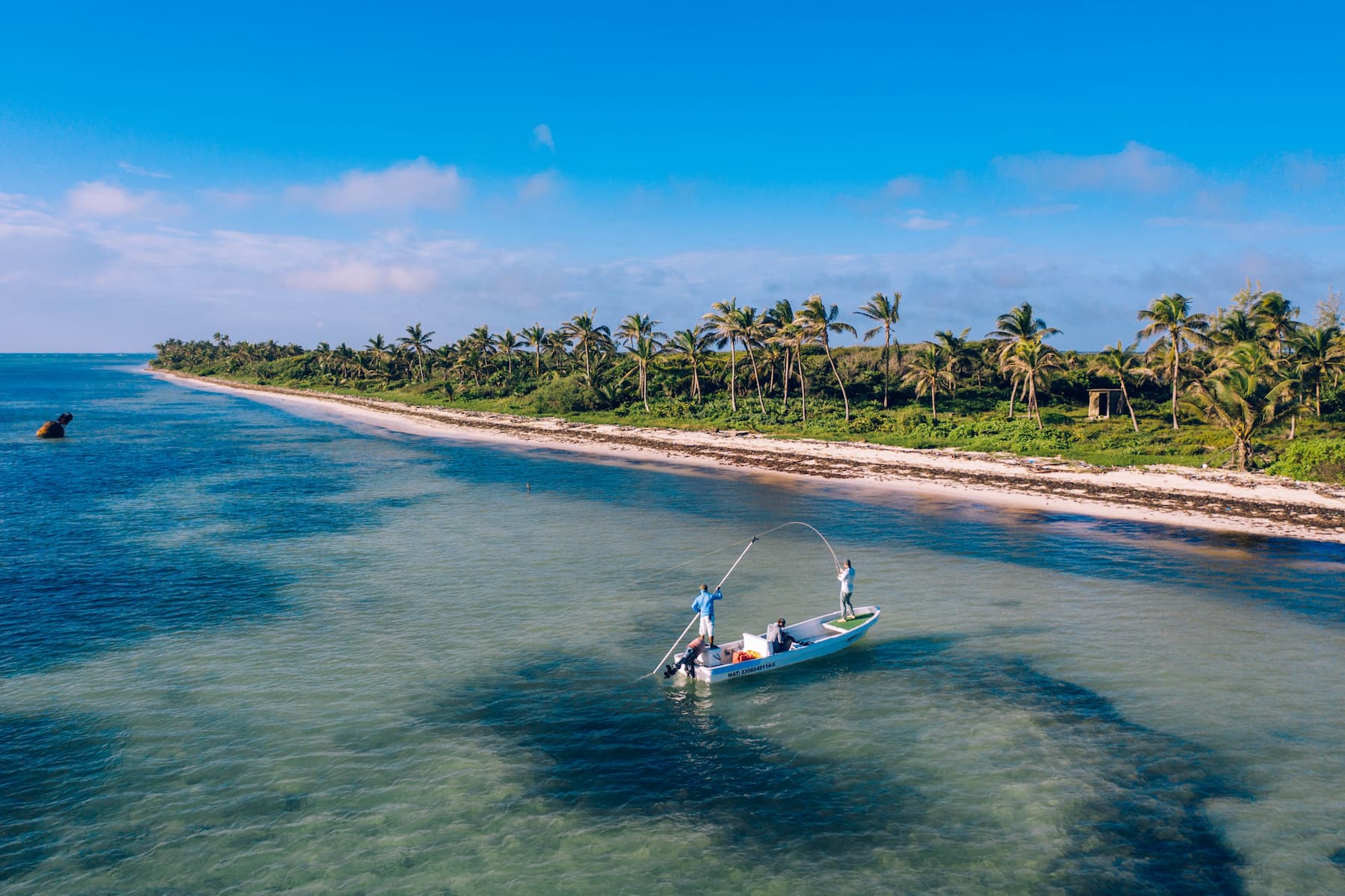
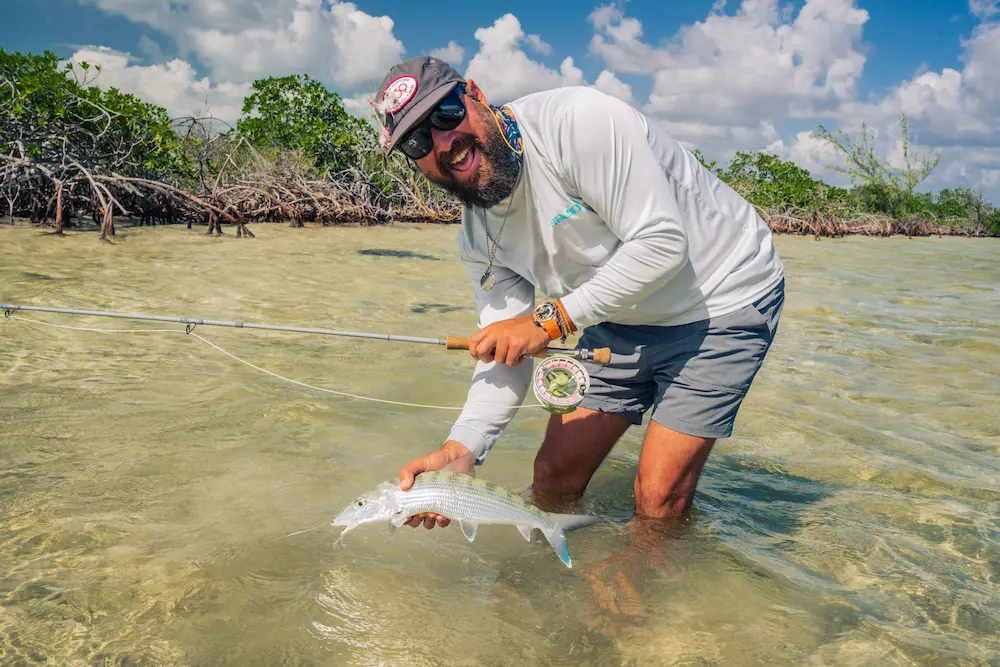
Pole quietly across a Chetumal Bay flat at first light and the water looks almost too clean. No cloudy runoff, no thick mats of turtle grass swaying underfoot, just pale sand and marl bottom stretching out under water so clear you can count the spots on a permit’s flank from thirty feet away. That clarity isn’t luck. It’s the signature of one of the more unusual estuary systems on the Yucatan Peninsula, and it’s the reason this fishery produces the numbers of bonefish and permit it does.
If you’ve read our post on Chetumal Bay’s permit fishery, you already know how the fish here behave differently than they do around Xcalak. This is the piece that explains why. To understand the fishing, it helps to understand the bay itself.
A Bay Built by a River, Not the Sea
Chetumal Bay is enormous, bigger than Ascension and Espiritu Santo combined, and it isn’t a typical saltwater lagoon. It’s what scientists call a mesohaline estuary: a semi-closed body of water where fresh and salt water mix continuously rather than settling into one or the other. The Rio Hondo, which forms the border between Mexico and Belize, empties into the bay’s northern end, while the Caribbean pushes in through a south-facing mouth pinched between the mainland and Ambergris Caye.
That constant blend of river and sea is what gives the bay its personality. Salinity shifts by season, by tide, and by how close you are to the river mouth versus the open water near Xcalak. Fish that call this water home have to be comfortable with that kind of variability, and the ones that thrive here, bonefish, permit, snook, and both juvenile and monster tarpon, are built for it.
Why There’s So Little Grass on These Flats
Anglers who’ve fished classic bonefish destinations expect thick beds of turtle grass. Chetumal Bay barely has any. Research on the bay’s food web found that submerged vegetation makes up a tiny fraction of its total biomass, low enough that even the resident manatee population, animals that depend almost entirely on seagrass elsewhere in their range, have to supplement their diet with mangrove leaves just to get by.
Instead, the bay runs on detritus and mangrove material sitting on the bottom sediment. That’s the real engine of the system: decomposing organic matter feeding the crabs, shrimp, and baitfish that in turn feed everything with a fin. It’s a different foundation than the seagrass-driven flats most saltwater anglers are used to, and it changes where and how fish feed. Permit here aren’t necessarily working grass beds for crabs. They’re working sand and marl edges, mangrove shorelines, and channel mouths where that detritus concentrates.
Mangroves, Cenotes, and the Clarity That Makes Sight Fishing Possible
The mangrove forests ringing the bay do more than provide structure. They filter the water, trap sediment, and stabilize the shoreline, which is a big part of why the flats stay wadeable and sight-fishable even after a hard rain. Add in the freshwater inflows from cenotes scattered along the bay’s edges, and you get pockets of especially bright, clean water that tarpon in particular seem to favor, often holding right over these springs.
This is also where the bay’s connection to Xcalak becomes obvious on the water. A narrow canal links the Mexican side of the bay to the Caribbean near Xcalak, so guides can move clients between two genuinely different ecosystems, the mangrove-lined, detritus-fed flats of the bay and the reef-adjacent, grass-and-coral water outside it, in the same morning. Few destinations in the region offer that kind of range from a single dock.
A Nursery as Much as a Fishery
The mix of shelter, food, and stable structure makes Chetumal Bay an exceptional nursery. Juvenile snook and baby tarpon in the 8 to 10-pound class use the mangrove creeks and back lagoons as a grow-out zone before pushing toward open water. Permit fishing here turns up numbers that surprise even experienced anglers, sometimes thirty or forty sightings in a single day, because the bay gives them cover and forage close together rather than forcing them to roam wide-open grass flats.
That’s the ecological reason behind what we describe in the permit fishery post: more shots, more schools, and permit that show up in places anglers wouldn’t expect to find them elsewhere on the Yucatan.
An Ecosystem Worth Protecting
The same qualities that make Chetumal Bay productive also make it sensitive. Researchers tracking the bay have flagged agricultural and urban runoff from the Rio Hondo watershed as a growing source of nutrient and sediment pollution, the kind that can tip a detritus-based system like this one out of balance. The manatees that depend on the bay’s mangroves are one of the clearest indicators of its health, and their steady presence here is a good sign, but not a guarantee.
It’s part of why we fish this water the way we do: catch-and-release, careful handling, and guides who’ve spent decades learning these flats rather than running through them. A bay this unusual doesn’t come along twice on the Yucatan coast, and keeping it healthy is what keeps the fishing what it is.
Want to see the ecosystem for yourself? Our guides fish both the bay and the reef-side flats near Xcalak. Xcalak’s history is also worth reading. They choose spots based on tides, season, and what you’re chasing.