

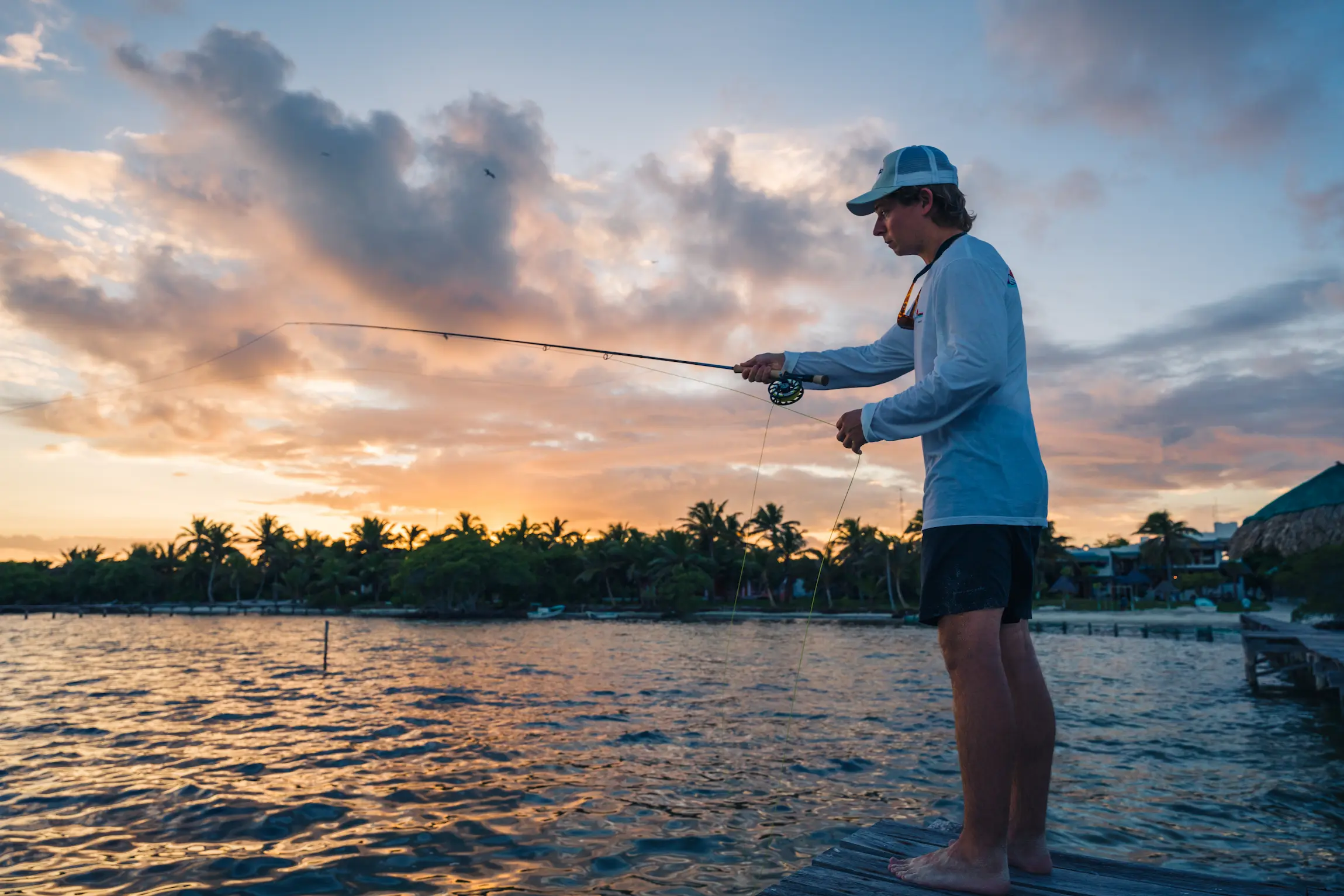
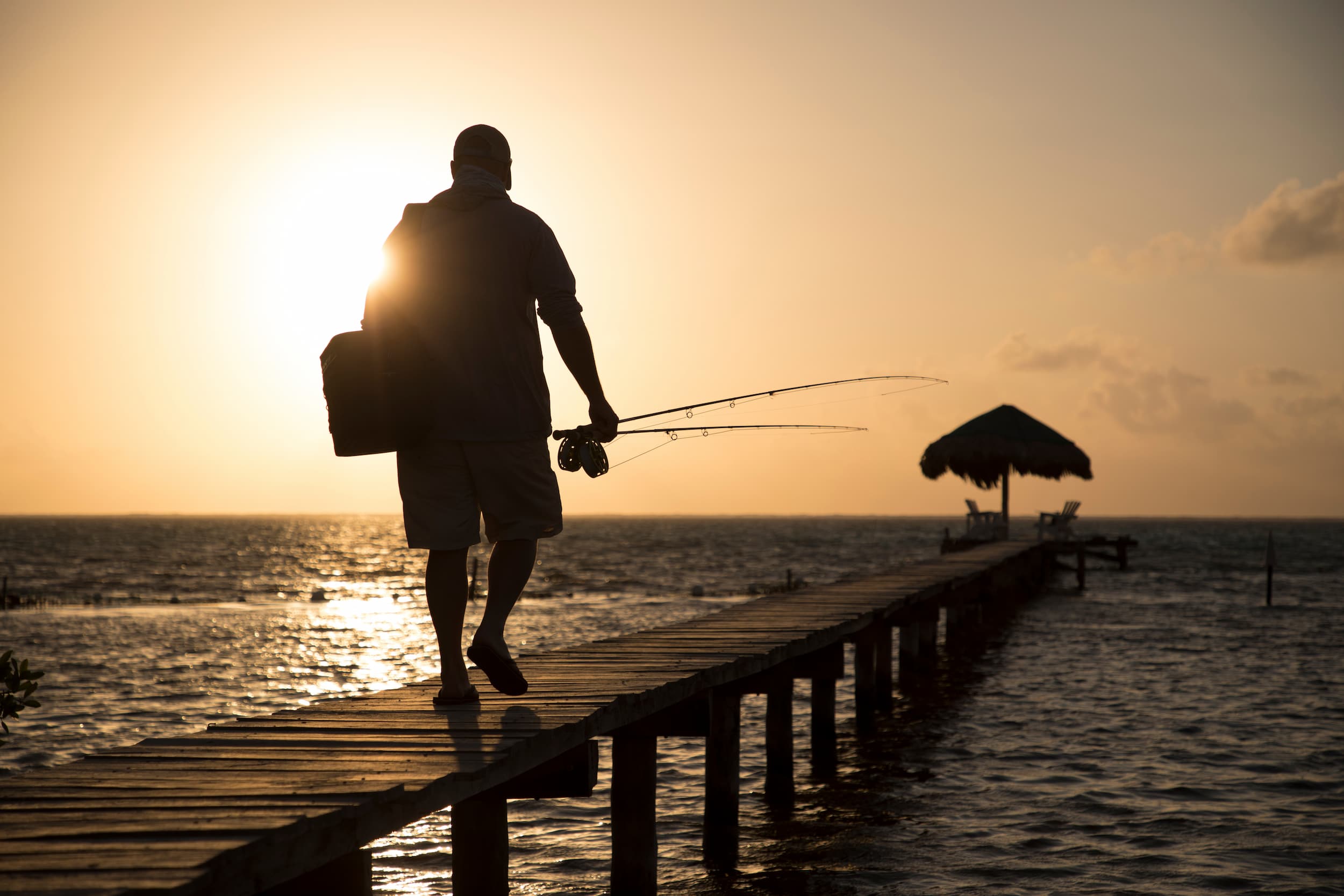
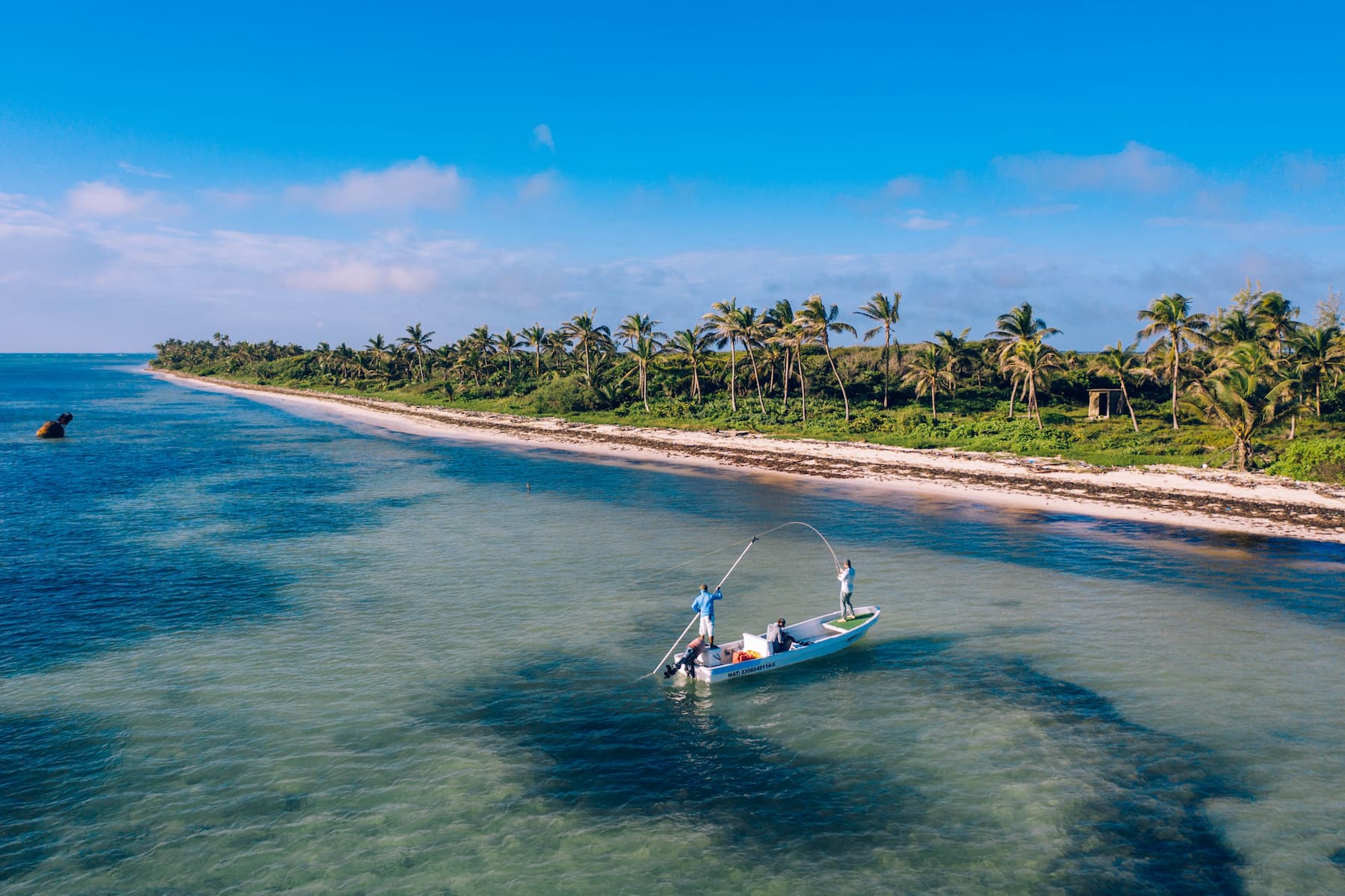
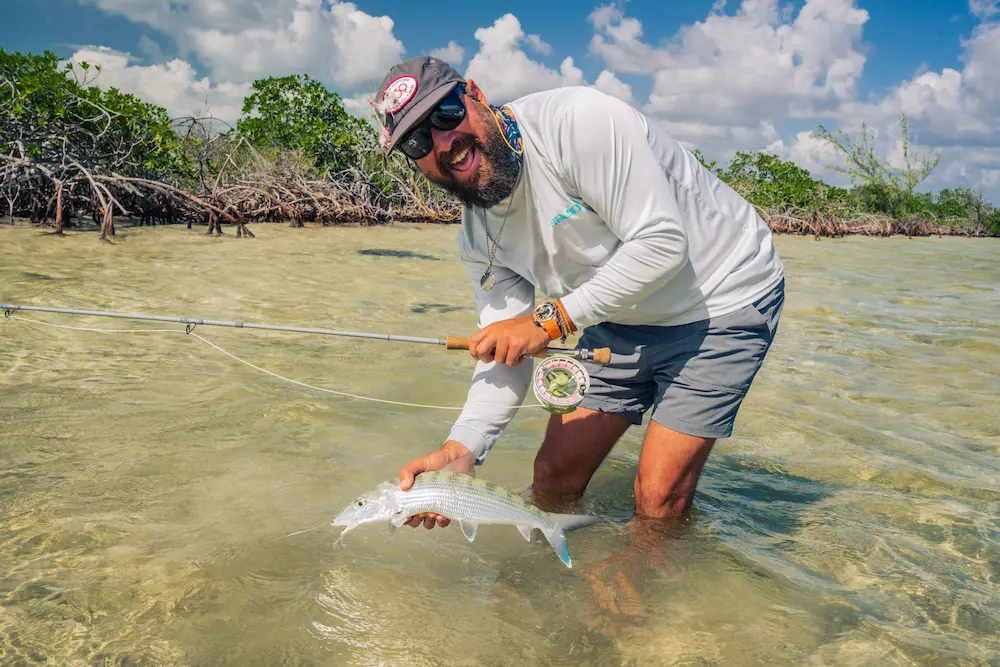
Planning your first trip to the small fishing village of Xcalak and wondering when to book? Short answer: Chetumal Bay fishes year-round. Permit, bonefish, and tarpon show up in every season. But after spending most of the year on these waters, we’ve learned timing still matters for saltwater fly fishing – whether you’re chasing schools of elusive permit, prefer days when you’re not fighting twenty-knot winds, or want the best chance at migratory tarpon. Here’s what we’ve figured out.
Why Xcalak Fishes Year-Round
Xcalak sits at the southern tip of the Yucatan Peninsula, sheltered by the Mesoamerican Barrier Reef and split between calm-water Chetumal Bay and the more exposed ocean-side flats — that mix of habitat is what keeps fish accessible in every season, whichever way the wind is blowing. For the full picture on the fishery, the geography, and what sets Xcalak apart from Ascension Bay or Costa de Cocos, see our complete Xcalak fly fishing guide. Here’s what that means month by month.
Seasons in Xcalak
Winter (November-February): Peak Season
Coolest months: highs around 80°F. Dry season means minimal rain and calm conditions. Northeast trade winds blow steady but workable.
Permit show up consistently, especially on sunny days when flats warm up enough to pull fish shallow. Cold fronts blow through every so often, bringing north winds and cooler temps that push fish to warmer water for a few days. Once the front passes, fishing goes back to normal.
Bonefish stay active all day. Cooler water doesn’t slow them down like heat does. Most fish run one to three pounds, with bigger ones pushing five to ten pounds showing up less frequently.
Tarpon: Only small tarpon – five to 20 lbs in the lagoons and mangrove channels. No migratory giants until May. Early mornings along mangrove edges work best.
Snook migration runs mid-December through late February, making winter the peak window for snook.
This is the high season. Book six to twelve months ahead.
Spring (March-April): Best All-Around
March warms up (highs mid-80s) and it’s the driest month. April becomes windiest. Wind makes casting harder, but the best guides in Xcalak have figured out where to position the boat.
Permit fishing hits peak activity. Water temps climb and permit get more active. You’ll see schools tailing along the flats, pushing into shallow water to feed. Some days you get more shots than you know what to do with. Other days you wonder if there are any fish left in Mexico. March through June is the best fishing for permit, with May right in the middle of it.
Bonefish also hit peak activity. Bigger bonefish show up more often. Spring sees the most consistent feeding all day. For first-time anglers, catching your first bonefish in Xcalak during spring is about as good an introduction to the flats as you’ll get.
Tarpon: Still only small tarpon around. Migratory giants haven’t arrived yet.
Summer (May-July): Grand Slam Window
The summer months bring some of the best fishing The XFlats has to offer if you can handle the heat. Bonefish, permit, and massive migratory tarpon are all in the area, and the heat and chance of rain drives out other anglers, so you’re working with an unpressured fishery. If you’re after a Grand Slam, or trying to catch your first permit, this is going to be your best shot.
Permit remain at peak activity through May and June. June through July still produces plenty of elusive permit, though heat pushes fish deeper midday. If you’re fishing in the summer, plan on being productive early and late, not at noon.
Bonefish are excellent. Summer heat (June through August) pushes them deeper midday. Mornings and evenings fish better.
Migratory tarpon (the 70 to 150 lbs fish) show up in May, and peak through June and July and August. You want a real shot at a hundred-pound tarpon, book in June and July. Small tarpon remain in the lagoons year-round.
May through July gives you the best window for a Grand Slam, since permit, bonefish, and migratory tarpon all overlap. We’ve seen it happen plenty of times. We’ve also watched people fish five straight days and not get it. That’s how Grand Slams work.
For fly fishing enthusiasts planning their first trip to Mexico, May and June deliver a great experience with all target species available, calmer winds, and less heat.
June kicks off hurricane season. Early season storm risk is low. When squalls hit, they blow through fast.
July brings the heat. Migratory tarpon fishing peaks. Heat pushes permit and bonefish deeper midday, so fish them early and move to tarpon as the day goes on.
Fall (August-October): The Underrated Window
August and September are the most unsettled months: late hurricane season, higher rain totals, occasional storms. Between systems, the flats fish well – the fish are hungry and less pressured by anglers.
Permit are always around. You’ll get shots. Heat still pushes them deeper during midday.
Bonefish are plentiful. November produces some of the best bonefishing of the year.
Tarpon: Small tarpon stick around in the lagoons. You’ll still see big migratory tarpon in August, and then occasionally see stragglers through September.
The scenario: fewer anglers competing for spots, and October winds are actually the calmest of any month.
The honest tradeoff: weather is less predictable. If you can build flexibility into your trip, fall offers serious value.
For more information, and a seasonal comparison chart, check out our When to Visit page.
Weather and Conditions
Xcalak runs on two seasons: dry (November-April) and rainy (May-October). Dry season brings minimal rain and predictable winds. Northeast trade winds blow November through March—steady but manageable with fly rods and reels, assuming you know how to double-haul. Practicing your casting before you get here is a good idea—we’ve watched anglers struggle for three days because they couldn’t cast in wind. Check out our Prepping for Salt Water Fishing page – we have some great video tutorials on how to cast into the wind, beef up your double-haul, and more.
Rainy season brings afternoon showers that dump hard for an hour then move on. Mornings usually stay clear. Southeast trade winds take over April through October.
Water temps run 70°F to 80°F year-round. Hurricane season runs June 1st through November 30th, with August and September seeing the most activity.
Planning Your Trip
Peak season (November-May) books earliest. Holiday weeks need six to twelve months advance booking. Shoulder season (June-August) offers more flexibility—two to four months out works. Low season (September-October) has the most last-minute availability.
Match timing to what matters. Chasing permit in peak conditions? Target March through June. Want migratory tarpon? Book late May through August. Prefer calm weather? November through February. Looking for value? September and October. Still not sure when to come? Reach out and talk to us, we’re here to help you plan an amazing trip.
Most anglers fly into Cancun International Airport and drive four and a half hours south along Mexico’s Caribbean coast to Xcalak. There are other options though, check out our page on getting here for more info.
Bring cash for tipping and incidentals — see our complete guide for the full logistics rundown (cash, connectivity, what to pack, and what to expect on the ground).
For rod weights, fly patterns, and the full packing list, see our gear and equipment guide.
Xcalak Fishes Year-Round
Every month offers fantastic fly fishing. The variables are weather, fish behavior, crowds, and price. Winter gives you calm conditions and strong permit fishing but costs more. Spring delivers probably the best all-around combination. Summer brings migratory tarpon and lower prices but higher heat. Fall offers value for anglers who can work around weather.
We fish Chetumal Bay through all four seasons. Our guides have fished these waters their entire lives and know where fish move when cold fronts blow through in February. We know which flats stay fishable when southeast winds pick up in May because we’ve figured out over the years where to hide from wind. We know where to find tarpon in July and where permit feed in November.
Ready to fish Xcalak? Whether you’re planning a permit trip, chasing a Grand Slam, or booking your first time on the flats for this overseas fishing trip, we’ll help you match your timing to your goals. Contact us to start planning your trip.