

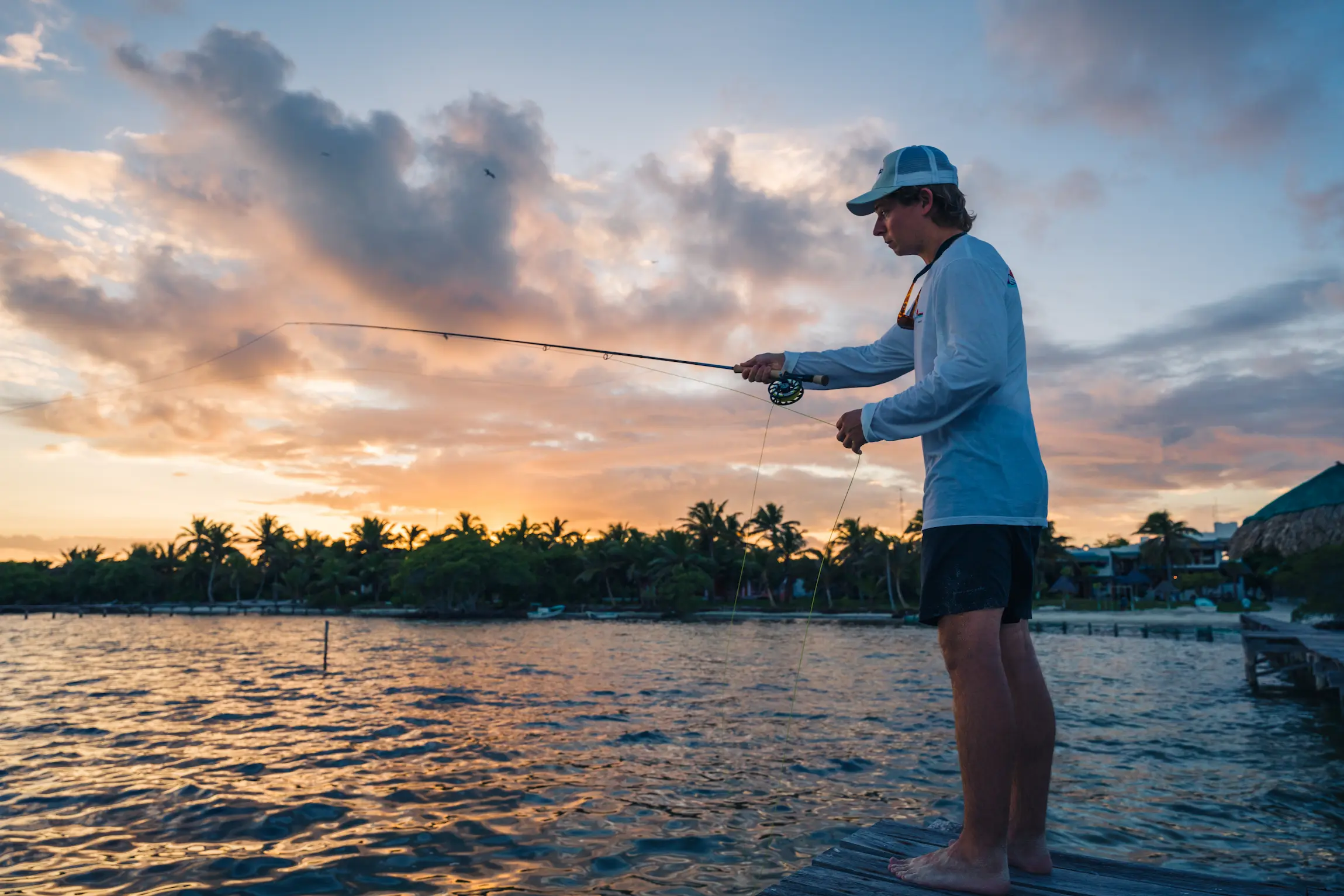
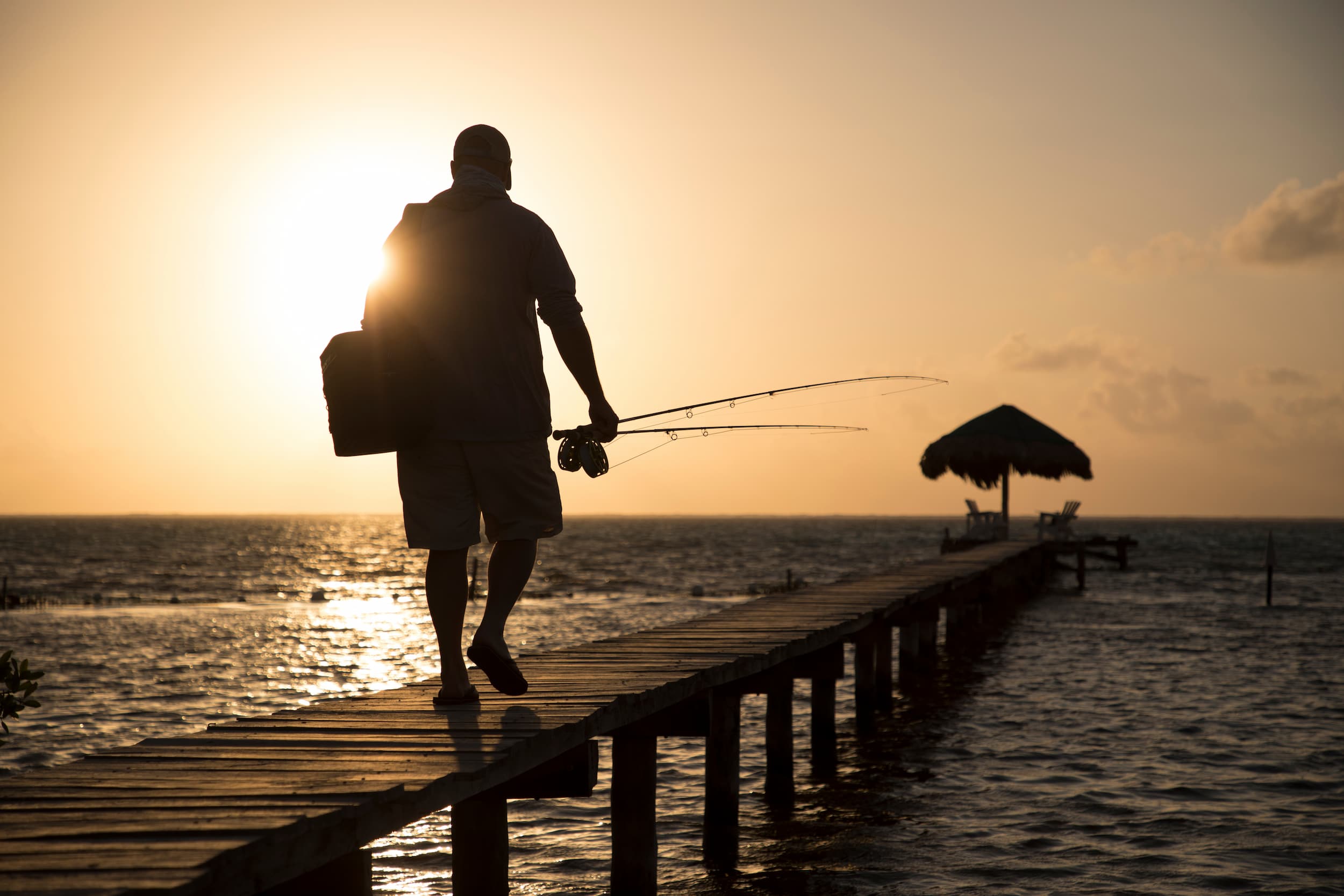
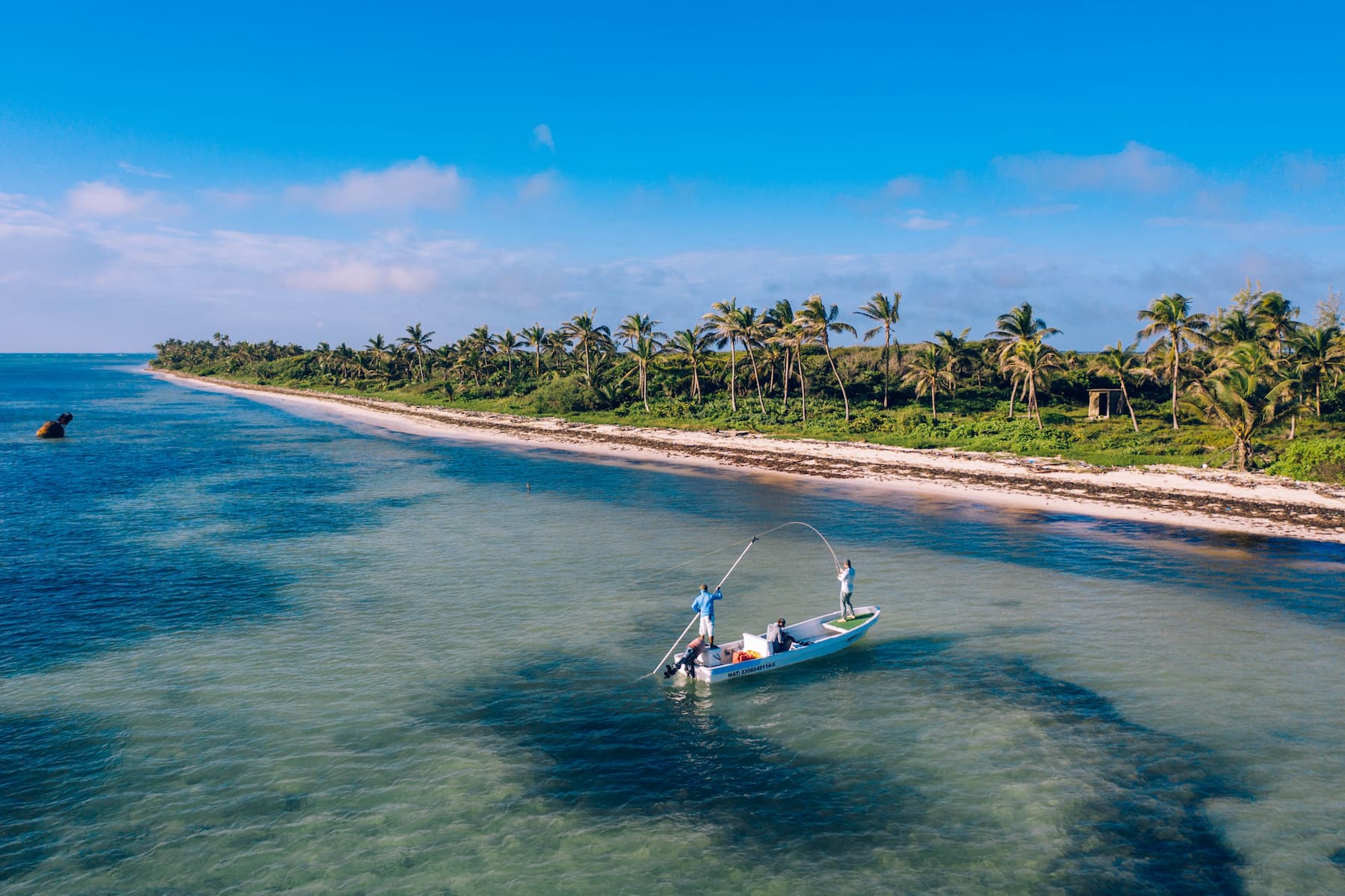
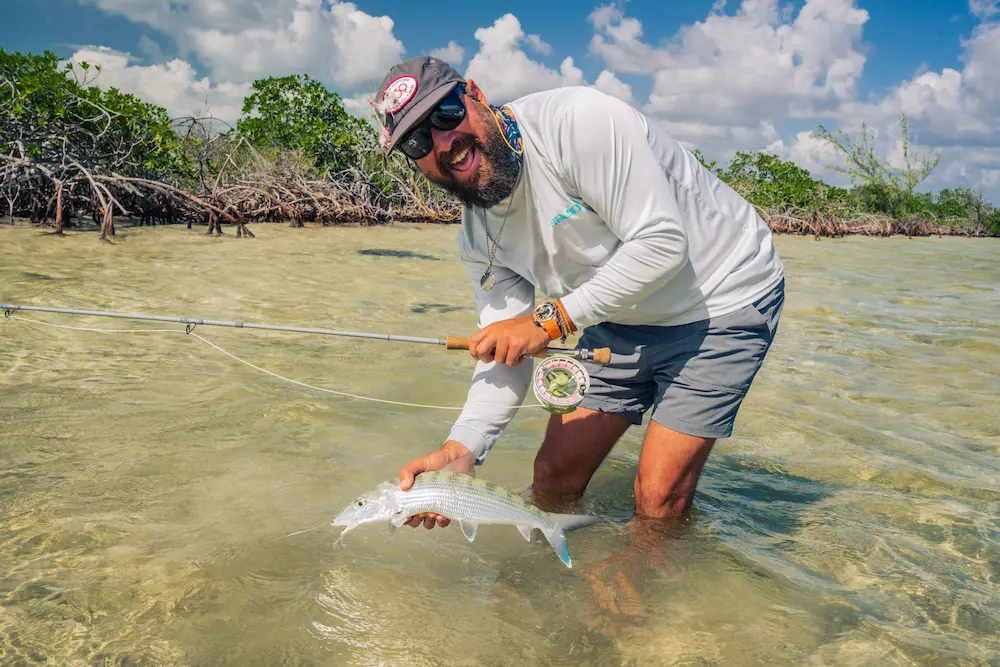
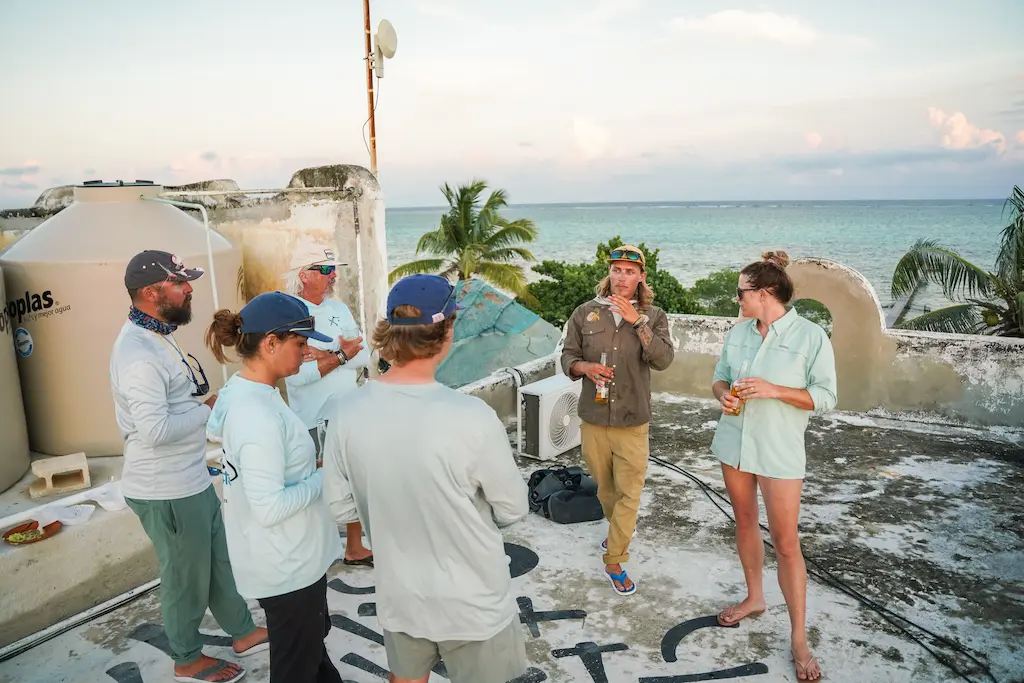
Xcalak sits at the southern tip of Mexico’s Yucatan Peninsula, squeezed between Chetumal Bay and the Caribbean. Hours from Cancun, at the end of a long road through jungle and coast, it’s one of the few hidden gems left. About forty boats fish the entire area. Compare that to Ascension Bay or Punta Allen and you’ll understand why fly anglers who fish Xcalak keep coming back.
If you’re researching fly fishing in Xcalak, Mexico (whether planning your first trip or returning for another round on these flats) this guide covers what you need to know: the fishery, target species, when to go, and what to expect when you get here.
Why Fly Fish Xcalak, Mexico?
Chetumal Bay is huge: larger than Ascension Bay and Espiritu Santo Bay combined. The Mesoamerican Barrier Reef (second-largest in the world) breaks wind and waves coming off the Caribbean, creating calmer conditions than most ocean-side flats. When the reef side gets rough, the bay offers shelter. When cold fronts blow through in winter, guides know which lagoons stay fishable.
The geography gives options. Inner lagoons hold resident permit schools and small tarpon year-round. Shallow flats with crystal-clear water pull in larger permit where you can watch them tail from a hundred feet out. Mangrove channels act as tidal highways where fish move with current. Having multiple habitat types matters when weather shifts – and weather shifts often enough that options become the difference between a productive day and sitting at the lodge.
Xcalak sees less fishing pressure than other Yucatan destinations. We’re four and a half hours south of Cancun International Airport, at the end of the road, and fewer than forty boats fish the entire area. Fish that aren’t getting pounded every day behave differently: they’re less spooky, you get more shots, and while presentation still matters, you’re not casting to fish that have seen a hundred flies that week.
The village itself is small: a few restaurants, basic infrastructure, no resort vibe. Xcalak is saltwater fly fishing in a place that still feels remote. For any avid angler looking for a hidden gem on Mexico’s Caribbean coast, this is it. The natural beauty of an unspoiled coastline doesn’t hurt either.
The Chetumal Bay Fishery
Chetumal Bay’s fishery breaks into three main habitat types, and the best permit guides in Xcalak know how to use all of them.
Inner lagoons stay sheltered when wind picks up on the ocean side. Resident permit schools live here. Small tarpon (five to twenty pounds) cruise mangrove edges. When conditions get rough elsewhere, these lagoons fish.
Shallow flats on the ocean side produce larger permit and better sight-fishing opportunities. Turtle grass and sand flats stretch for miles. You’ll see fish tailing in crystal-clear waters on calm days. Wind exposure is the trade-off: when it blows, casting gets harder and fish push deeper.
Mangrove channels connect the bay to the Caribbean through a network of cuts and passages. Fish move through these channels with the tides. Small tarpon hold along mangrove roots. Snook show up mid-December through February. Bonefish cruise through looking for crabs and shrimp.
Guides who grew up fishing Chetumal Bay know which flats stay calm when north winds blow, where permit move after a cold front, and which channels produce on falling tides. That local knowledge matters more than any gear you bring.
Target Species in Xcalak
Permit
Permit fishing is why most anglers come to Xcalak. They’re here year-round, but we’ve seen the best fishing March through June, with May right in the heart of it. Water temps climb through spring and permit get more active. You’ll see schools tailing along the flats, pushing into shallow water to feed.
You’ll have days where permit are everywhere and you can’t keep track of how many you’ve cast to. You’ll also have days where you start questioning whether the species still exists. Both are normal.
June through October still produces plenty of permit, though heat pushes them deeper during midday. If you’re fishing in the summer, plan on being productive early and late. Winter months (December through February) fish well, especially when the sun’s out and flats warm up enough to pull fish shallow. Cold fronts blow through every so often, bringing north winds and cooler temps that push fish to warmer water for a few days. Once the front passes, fishing goes back to normal.
For detailed tactics on approaching and presenting to permit, check out our guide on how to catch permit on the flats.
Bonefish
Bonefish are here twelve months a year. The flats and lagoons around Chetumal Bay hold solid populations. Most fish run one to three pounds, with bigger ones pushing five to ten pounds showing up less frequently.
March through May gives you the best chance at bigger bonefish. Spring also sees the most consistent feeding all day. For fly anglers planning their first bonefish experience, catching your first bonefish in Xcalak during spring conditions is about as good an introduction to the flats as you’ll get. Summer heat (June through August) pushes them deeper midday. Mornings and evenings fish better. Winter bonefish stay active all day. November supposedly produces some of the best bonefishing of the year, though we don’t see as many guests in fall so the data’s thinner.
Tarpon
Tarpon here come in two sizes: small tarpon that live here year-round, and the big migratory fish that show up seasonally.
Small tarpon (five to 20 lbs) live in the lagoons, cenotes, and mangrove channels all year. These fish are around anytime you visit. Early mornings along mangrove edges work best.
Migratory tarpon (the 70 to 150 lbs fish) are seasonal. Migration starts in May, peaks June and July, then drops off in August and September. If you want a real shot at a hundred-pound tarpon, book late May through early August. Their speed when they take a fly is something you don’t forget.
This window also gives you the best chance at a Grand Slam, since permit, bonefish, and migratory tarpon all overlap. We’ve seen it happen. We’ve also watched people fish five straight days and not get it. That’s how Grand Slams work. Good luck if you’re chasing one: you’ll need a bit of it alongside solid casting.
Snook, Jacks, and Barracuda
Snook migrate into Xcalak’s mangrove channels and creek mouths mid-December through late February, staging around structure as water temperatures drop. They’re ambush predators, so working baitfish patterns tight against mangrove roots and undercut banks produces the most eats. An 8-weight with a floating line and a short, stout leader (20–30 lb fluorocarbon) holds up better against the gill-plate cuts and structure they run for.
Jacks (crevalle and horse-eye) school on the flats and in the channels year-round, and they don’t get finicky. When permit go quiet or wind shuts down sight-fishing, jacks are the fallback that keeps rods bent — they hit baitfish patterns hard and burn line on the first run.
Barracuda cruise the flats and channel edges year-round too. Wire or heavy fluorocarbon bite tippet is worth carrying if you want to target them on purpose — a fast-stripped fly is usually all it takes. For anglers chasing an “everything” day, cuda give you a shot at five species before lunch.
When to Fish Xcalak
The best time to visit Xcalak depends on what matters to you: calm weather, peak permit activity, migratory tarpon, or fewer guests. Here’s the skinny: Every season fishes well, but each comes with trade-offs. March-May delivers the best all-around fishing. Permit hit peak activity and bonefish are excellent, with migratory tarpon rolling in around May for the best Grand Slam opportunity. For a detailed seasonal breakdown, see our full guide on when to fly fish Xcalak.
Planning Your Trip to Xcalak
Booking windows vary by season — peak months need the most lead time, fall the least. See our seasonal guide for the full booking-by-season breakdown.
There are a few different ways of getting here, but most anglers fly into Cancun International Airport and drive four and a half hours south along Mexico’s Caribbean coast. The route runs Cancun → Tulum → Mahahual → Xcalak. Highway is paved to Mahahual, then rougher road to Xcalak. Some people break the drive with an overnight in Tulum. Most push through.
Xcalak is remote. Bring spare reels and rods if you have them; a good idea since tackle shops are four-plus hours away if gear fails mid-trip. The lodge provides accommodations with private bathrooms, air conditioning, and meals: fresh fruit at breakfast, locally-caught fish for dinners. Comfort matters too when you’re spending multiple nights on this kind of adventure.
For flies, crab patterns work year-round for permit. Mantis shrimp patterns and Gotchas for bonefish. Black Death and EP Minnows for tarpon. Most anglers bring 8-weight and 9-weight rods for permit, 7-weight or 8-weight for bonefish, 9-weight or 10-weight for tarpon. Check out our gear list for a more in-depth look at what to bring.
A typical day starts early – on the water by dawn. Full days of fishing, or half days in summer when heat builds. Afternoons: rest, tie flies, sit under the palapa. Evenings: dinner, trip stories, planning the next day with your guide.
What to Expect in Xcalak
Xcalak is a small fishing village hours from anywhere. Basic infrastructure, a handful of restaurants, no resort compounds. This is authentic Mexico—remote, uncrowded, nothing like Cancun’s hotel zone. The experience is boutique, small-group, personalized. Not corporate. This is a fishing lodge in a village that takes fishing seriously.
Fish with guides who were born in Xcalak and learned to pole boats before they learned to drive. This is their home water, and there’s a good reason they’re considered some of the best permit guides on Mexico’s Caribbean coast.
A few practical notes before you go: bring pesos in cash — Xcalak has no bank or ATM, and guide tips are customary and cash-only. Cell service is limited, so plan on being mostly offline. English is spoken at the lodge and by most guides, though a little Spanish goes a long way in the village. All anglers need a valid Mexican fishing license — see our FAQ for how to get one and other trip-planning details. Chetumal Bay sits inside a federally protected biosphere reserve, so a small conservation/park fee applies and goes toward protecting the fishery. Pack light, pack sun protection, and expect an unhurried pace — this isn’t a place that runs on a schedule.
Xcalak, Mexico Fly Fishing FAQ
Is Xcalak, Mexico good for fly fishing? Yes. Xcalak sits on Chetumal Bay, a fishery larger than Ascension Bay and Espiritu Santo Bay combined, sheltered by the second-largest barrier reef in the world. Permit, bonefish, and tarpon are all present year-round, and light fishing pressure means less-spooked fish and more shots per day than busier Yucatan destinations.
When is the best time to fly fish Xcalak? March through June is the strongest all-around window: permit and bonefish both peak, and migratory tarpon arrive by May, opening up Grand Slam opportunities. See our full seasonal breakdown for a month-by-month look.
How do you get to Xcalak, Mexico? Most anglers fly into [confirm current airport — see fact-check note below] and connect by van to the lodge. Full driving directions here.
What fish can you catch in Xcalak? Permit, bonefish, and both resident and migratory tarpon are the headline species, with snook (December–February), jacks, and barracuda rounding things out. See the full species guide.
Do I need a fishing license to fish Xcalak? Yes — all anglers need a valid Mexican fishing license. See our full FAQ for how to get one and other trip-planning details.
Ready to fish Xcalak? Our guides grew up on Chetumal Bay and fish it year-round. Check our rates and availability.